RFID Card Printing: A Complete Guide to Smart, Secure Identification
In our digital age, access control and identification systems are evolving beyond printed cards. Companies, educational institutions, hospitals, and other insti
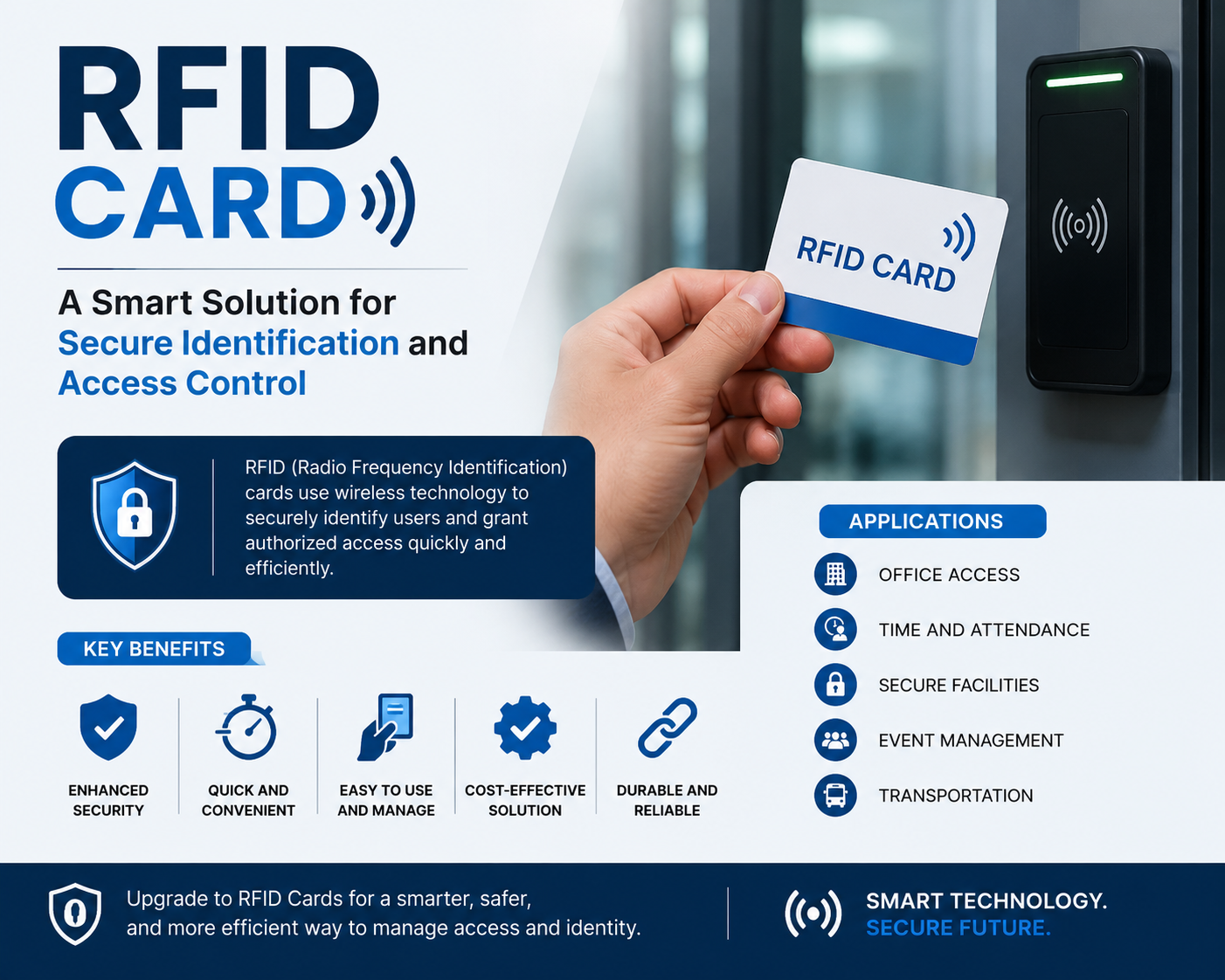
In our digital age, access control and identification systems are evolving beyond printed cards. Companies, educational institutions, hospitals, and other institutions are quickly moving to more efficient systems that are fast, secure and convenient. One of these innovative technologies is RFID card printing.
RFID cards play a crucial role in today's identification. From office security to attendance monitoring, and even contactless payments, RFID cards are revolutionising processes. In this blog, we'll cover all you need to know about RFID card printing, including features, advantages, applications, and why it's the identification of the future.
Understanding RFID Technology
RFID is an abbreviation for Radio Frequency Identification. It is a contactless communication system that operates on radio waves. The RFID card has a chip and antenna that enable it to wirelessly transmit data to the reader.
RFID cards are much faster than conventional ID cards that need to be swiped or scanned. This makes them quick, convenient and convenient in busy situations.
What is RFID Card Printing?
RFID card printing involves the design, programming and printing of smart cards with RFID chips. These cards merge visual identification elements like photographs, name and logos with smart chip technologies.
The aim is to produce a multifunctional card that can be used to identify an individual, as well as communicate and interact with various systems for access control, time and attendance, payments and the like.
Key Features of RFID Cards
A key factor in the popularity of RFID cards is their features.
They are contactless, enabling users to tap the card to a reader. This eliminates wear and tear, and speeds processes. RFID cards are also very secure, with encrypted information stored on the card, reducing fraud and counterfeiting.
RFID cards are also durable. They are made from durable materials such as PVC and won't easily wear out. They also feature multiple functionalities, allowing a single card to be used for multiple purposes, such as building access, cafeteria payments, attendance tracking, and more.
Types of RFID Cards
RFID cards come in various types, depending on the frequency and application.
Low-frequency cards can only be read over short ranges, and are used for simple access control. High-frequency cards are faster and more secure, and are suitable for use in offices and schools. Ultra-high frequency cards are used for longer distance tracking such as asset management.
Passive RFID cards are those that don't have a battery and are powered by the reader. These are the most prevalent because they are low cost. However, active RFID cards have a battery and provide longer range and data storage, making them ideal for sophisticated tracking applications.
Benefits of RFID Card Printing
Using RFID card printing offers a number of benefits to today's businesses.
Improved security is a key advantage. The use of encrypted information on RFID cards makes them very difficult to copy. This guarantees only those with permission can enter secure areas.
Another advantage is improved efficiency. Contactless scanning makes entry, attendance check, and transactions quicker and easier. This is particularly beneficial in busy environments.
RFID cards also save money. Even though the upfront cost is higher than conventional cards, RFID cards result in lower labour costs and greater automation, saving money in the long run.
Customization is another key benefit. RFID cards can be customized to match the company's image, such as logos, colours and design. This enhances professionalism, and reinforces brand awareness.
Applications of RFID Cards
RFID cards can be applied in various industries for their versatility and convenience.
In offices, they are used as employee identification cards, security badges, and time clocks. Staff can use their cards to gain entry, access secure areas and clock in or out.
In schools, RFID cards are used for student ID, library access and security. They assist in managing processes and keeping students safe.
Healthcare institutions also use RFID cards for patient ID, employee access, and data management. They increase efficiency and eliminate errors.
In the hospitality industry, RFID cards are used as room keys to access hotel rooms with a tap. They can also be used for in-house payments and access to services.
RFID technology is widely used in events and conferences. RFID cards are used for access, tracking and VIP passes.
RFID cards are also used in retail and transportation for contactless payments, which simplifies the payment process.
The RFID Card Printing Process
RFID card production is a step-by-step process to ensure quality and reliability.
First, the card layout is designed. This involves incorporating design elements such as the company logo, cardholder personal details and images. Good design improves user experience and branding.
Next comes chip encoding. Information like user ID, access rights or account information is encoded into the RFID chip within the card. This is a crucial phase as it defines the card's functionality.
Once encoded, the card is printed using smart card printers. These printers provide sharp images and accurate registration.
It is then laminated to provide a protective layer. This protects the card from wear and tear, fading and damage, and prolongs its lifespan.
Lastly, the cards are tested. The cards are tested to ensure they function properly with RFID scanning equipment and comply with standards.
Materials Used in RFID Cards
RFID cards are generally constructed from long-lasting materials.
Polyvinyl chloride (PVC) is the most popular because it's durable and inexpensive. Composite PVC is a more durable type that can withstand greater pressure and heat.
Some companies are also choosing more sustainable materials such as PET, which are more environmentally friendly and durable.
Customization Options
Customization is a key feature in RFID card printing.
Companies can opt for full colour printing, barcodes or QR codes, holograms for increased security, and even signature panels. Variable data printing enables each card to contain different data, which makes them highly personalised.
These personalization options allow RFID cards to look as good as they function.RFID cards can now be functional, attractive and professional looking.
Challenges of RFID Card Systems
Despite the advantages, RFID systems have some drawbacks.
It can be more expensive to set up than conventional systems. Companies must purchase readers, software and other equipment.
Privacy and security issues might also arise. But encryption and effective system management can help to overcome these concerns.
There's also technical support. RFID systems need to be maintained to keep them running efficiently.
Future of RFID Card Printing
RFID technology is rapidly changing and the future is bright.
A key development is the convergence of RFID and mobile. Mobile phones are increasingly becoming electronic cards, eliminating the need for physical cards.
Biometric integration is another advancement. Fusing RFID with biometric matching like fingerprint or facial recognition provides security and identification.
RFID is also being incorporated into smart networks via IoT. This enables real-time monitoring and data exchange between devices.
Remote control and monitoring of RFID systems are also becoming more common with cloud-based management.
Tips for Maintaining RFID Cards
With proper maintenance, RFID cards can last longer.
Don't fold the card, which could damage the chip. Avoid exposing the card to magnets and high temperatures. Card holders can protect against scratches and damage.
Clean with a soft cloth to keep the card looking and working its best.
The Benefits of RFID Card Printing
RFID card printing is not just an improvement - it's an investment in security and efficiency. It makes processes easier, improves user convenience and boosts security for access and data.
By embracing RFID, companies can streamline their operations and deliver a convenient user experience, giving them a leg up on the competition.
Conclusion
RFID cards are essential for today's identification requirements. Its contactless nature, security and versatility are revolutionizing access control and identity management.
Whether in the office, at school or in the clinic, RFID cards offer a secure and effective solution that works for the modern world. With ongoing technological developments, RFID will only grow stronger.
So, embracing RFID card printing is not just following the latest trend, it's creating a more intelligent, secure, and efficient world.
Provide important information that is actual, sharp and reliable
BLOGORA
LATEST NEWS
DAILY
Have a story to tell? Write for Blogora.
We're always looking for fresh perspectives, expert analyses, and investigative pieces from passionate writers.
PITCH A STORY →RELATED POST ON : EDUCATION
VIEW ALL EDUCATION →Have a Story
To Tell?
Join our roster of industry experts, investigative journalists, and passionate writers. We're actively seeking fresh perspectives for our editorial platform.
ALL SUBMISSIONS REVIEWED WITHIN 48 HOURS